Posted in: Ingredient Buyer Guides
Ginseng extract is a familiar name, which is exactly why it needs careful sourcing. A buyer can receive three quotes for "ginseng extract" and be looking at three different materials: different Panax species, different plant parts, different extract ratios, different ginsenoside methods and different amounts of carrier.
For supplement brands, the problem is not finding someone who sells ginseng. The problem is approving a grade that your QA team, formulation team and target market can all accept.
Quick definition: Ginseng extract is commonly produced from Panax species such as Panax ginseng or Panax quinquefolius. Commercial grades are often compared by extract ratio and ginsenoside content, but buyers also need species, plant part, carrier status, solvent and contaminant controls.
"Ginseng" is not a full specification
The common name is only the beginning. Asian ginseng and American ginseng are not the same botanical source. Red ginseng and white ginseng are not simply different label designs. Root, leaf and other plant parts can carry different expectations.
Before asking whether the price is competitive, ask what the supplier is actually offering:
- Latin botanical name;
- plant part;
- country or region of origin;
- red ginseng, white ginseng or another processing form;
- extract ratio;
- ginsenoside standardization;
- carrier or excipient status;
- solvent system;
- identity and contaminant testing.
If those answers are missing, the buyer is comparing a product name rather than a material.
Species and plant part come first
A strong ginseng specification should identify the Panax species and plant part clearly. This matters for quality review, label decisions, market positioning and regulatory discussion. "Korean ginseng," "American ginseng" and "red ginseng" may be useful commercial terms, but they should not replace the botanical identity.
For higher-value projects, ask how identity is confirmed. A combination of supplier traceability, botanical identification and chromatographic profile is often more useful than relying on one general statement. DNA testing may help in some cases, but it is not always the whole answer for processed extracts. The method should make sense for the actual material.
Ginsenosides: useful, but not the whole story
Ginsenosides are important marker compounds in ginseng chemistry. They are one reason ginseng extract specifications often focus on total ginsenosides or named markers such as Rb1, Rg1, Re, Rc and Rd.
The number still needs context. Does "total ginsenosides" mean a sum of named HPLC peaks? Is the value reported on dry basis or as-is basis? Is the result before or after carrier adjustment? Does the COA show individual markers or only one total? Does the profile make sense for the declared species and processing form?
A supplier offering a clear HPLC/UPLC method and marker list is easier to evaluate than one offering a broad "saponins" claim with no detail.
What Good Nutrition Bio currently lists
The Good Nutrition Bio product page provides a useful starting point for a real commercial specification. It currently lists Ginseng Extract as a Panax root extract standardized by ginsenoside content or extract ratio. The public page does not state one universal ginsenoside percentage, so buyers should request the agreed specification and lot-specific COA before comparing offers.
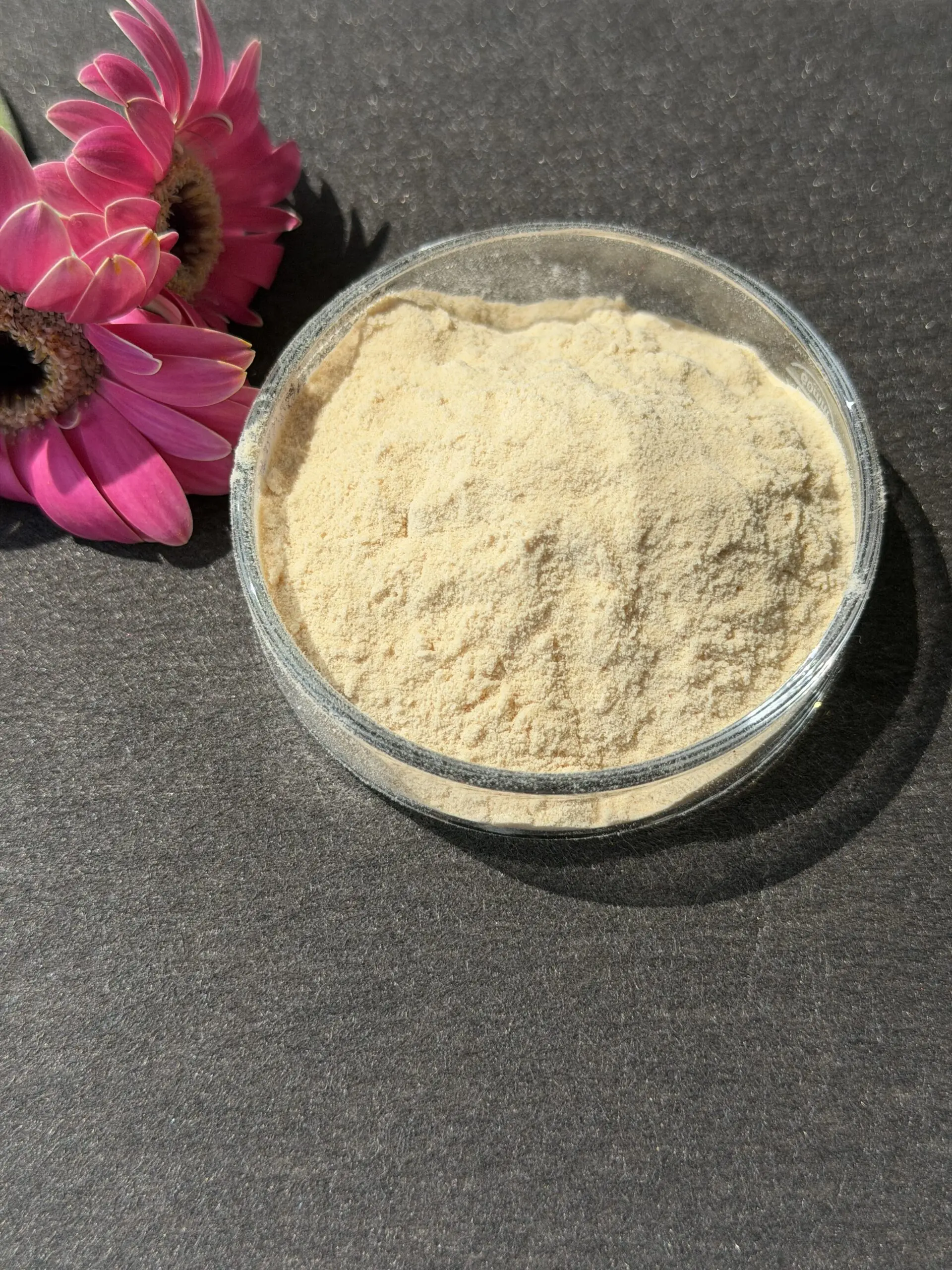
The public product-page details are:
| Item | Current public information |
|---|---|
| Product name | Ginseng Extract |
| Material identity | Declared Panax species and root part |
| Appearance | Light yellow to tan fine powder |
| Key specification | Total or individual ginsenosides, batch specific |
| Characteristics | Root-derived botanical; ginsenoside profile varies by species and processing; characteristic bitter-sweet taste |
| Listed applications | Capsules, tablets, tonics and botanical drink powders |
| Quality parameters to review | Panax species, root part, botanical authentication, ginsenoside profile, pesticides, residual solvents, heavy metals and microbiology |
The product page also links a public sample COA for Ginseng Extract. Treat it as a document for lot and method review, not as proof that every future batch has the same result. Confirm the batch number, test date, method, specification basis and current revision with the supplier.
Extract ratio can be misunderstood
Extract ratio is useful, but it is often over-read. A 10:1 extract generally suggests that ten parts of raw material were used to produce one part of extract. It does not prove potency by itself. It also does not replace marker testing, contaminant testing or a batch COA.
The best sourcing documents connect the extract ratio to the plant part, solvent system, carrier status and ginsenoside assay. If the extract ratio sounds strong but the marker result is weak or unclear, ask for the method and calculation before approving the sample.
What a practical specification should cover
Use this framework when comparing suppliers.
| Item | What to check | Why it matters |
|---|---|---|
| Botanical identity | Panax species and plant part | Prevents confusion between different ginseng materials |
| Processing form | Red, white or other declared form | Affects composition and positioning |
| Extract ratio | Ratio and calculation basis | Helps interpret concentration claims |
| Ginsenosides | Total and/or named markers by HPLC/UPLC | Supports standardization |
| Carrier status | Carrier name and percentage where used | Affects assay, labeling and price comparison |
| Solvent system | Water, ethanol/water or other process | Supports residual-solvent review |
| Appearance | Color, odor and powder form | Helps incoming inspection |
| Moisture | LOD or water content | Controls caking and stability risk |
| Pesticides | Market-specific screen | Important for botanicals |
| Heavy metals | Pb, As, Cd, Hg limits | Needed for safety review |
| Microbiology | TAMC, TYMC and pathogens | Required for ingestible use |
| Adulteration review | Identity method and marker profile | Reduces substitution or spiking risk |
Documents to ask for before sampling
Request the current specification, sample COA, Latin name and plant part statement, extract ratio, ginsenoside method, carrier declaration, solvent statement, pesticide screen, heavy metals, microbiology, allergen/GMO/irradiation statements, origin information, packaging instructions and shelf-life or retest support.
The sample should represent the commercial material. If the sample COA is incomplete, or if the supplier cannot say whether the commercial lot will use the same carrier and marker method, pause before moving the project forward.
Formulation questions that matter
Ginseng extract can bring color, odor, bitterness and hygroscopic behavior into a formula. Those details are not minor. They affect tablets, capsules, powder blends, gummies and beverages differently.
For capsules, check flow, bulk density and dose uniformity. For tablets, review compression and color impact. For powders, check taste and blending. For drinks or gummies, test bitterness, precipitation, heat exposure and stability in the finished matrix.
Ginseng is often used with caffeine, B vitamins, mushrooms, adaptogen-style botanicals or minerals. Combination formulas should be tested as formulas, not approved ingredient by ingredient on paper only.
Watch the easy-to-miss cost factors
Two ginseng extracts can have the same quoted ginsenoside percentage and still differ commercially. Carrier content, extract ratio, pesticide testing, origin documentation, minimum order quantity, lead time and batch consistency can all change the real cost.
Low price deserves attention, but so does a price that seems unusually low for the claimed specification. Ask whether the grade is standardized by a validated method, whether the carrier is included in the assay basis, and whether third-party testing is available when needed.
Claims and market review
Ginseng appears in public health and herbal monograph sources, including NCCIH and EMA materials. These are useful for context, but they do not automatically authorize a claim on a supplement label in every market.
Supplier copy should stay practical: vitality concepts, daily wellness, energy-support positioning where permitted, healthy-aging, traditional herbal products and technical botanical extract supply. Avoid disease-treatment language, guaranteed immune or cognitive outcomes, and regulatory approval language unless a specific market review supports it.
RFQ information that gets better answers
A useful RFQ should include target species, plant part, extract ratio, ginsenoside target or marker list, dosage form, destination market, order quantity, annual volume, required documents, packaging preference, sample quantity and timing.
That level of detail helps the supplier quote the right grade instead of the broadest available ginseng extract.
Related Good Nutrition Bio resources
- Ginseng Extract product page
- Quality Control
- Botanical Extract Testing Guide
- Evaluate Botanical Extract Supplier
- Request a Quote
Frequently asked questions
Is Panax ginseng the same as American ginseng?
No. Panax ginseng and Panax quinquefolius are different botanical sources. Confirm Latin name, plant part, origin, processing form and marker profile before comparing quotes.
Are total ginsenosides enough?
They are useful, but not always enough. A stronger specification may include named markers, method details, carrier status, extract ratio and contaminant limits.
What does a 10:1 ginseng extract mean?
It usually describes a raw-material-to-extract relationship. It does not replace ginsenoside testing, identity testing or a batch COA.
What should buyers check on the COA?
Check botanical identity, plant part, extract ratio, ginsenoside assay, marker list, carrier status, moisture, pesticides, heavy metals, residual solvents, microbiology, batch number and retest or expiry date.
Can ginseng extract be used in beverages or gummies?
It can be evaluated, but taste, color, precipitation, heat exposure and stability need finished-product testing.
Practical buying conclusion
Ginseng extract should be bought as a defined botanical grade, not as a familiar name on a supplier list. Species, plant part, extract ratio, ginsenoside method, carrier disclosure and contaminant testing determine whether the quote is actually usable.
To discuss a ginseng extract specification, development sample or bulk quote, review the Ginseng Extract product page or contact Good Nutrition Bio.
References
- NCCIH. Asian Ginseng. https://www.nccih.nih.gov/health/asian-ginseng
- PubChem. Ginsenoside Rb1. https://pubchem.ncbi.nlm.nih.gov/compound/Ginsenoside-Rb1
- Christensen LP. Ginsenosides: Chemistry, Biosynthesis, Analysis, and Potential Health Effects. Advances in Food and Nutrition Research. 2009;55:1-99. https://doi.org/10.1016/S1043-4526%2808%2900401-4
- European Medicines Agency. Final assessment report on Panax ginseng C.A.Mey., radix – revision 1. 2024. https://www.ema.europa.eu/en/documents/herbal-report/final-assessment-report-panax-ginseng-camey-radix-revision-1_en.pdf
Editorial note: This article is for B2B educational and procurement purposes. It is not medical, legal or regulatory advice. Suitability should be verified for the specific ingredient lot, finished product and destination market.