Posted in: Ingredient Buyer Guides
Quick answer: A SAM-e packaging and receiving checklist should connect the exact supplied material to its approved package, written storage and transport instructions, and lot-specific acceptance documents. Agree those requirements before dispatch. On arrival, record package integrity, lot identity and any transport evidence required by the purchase agreement; keep unresolved discrepancies under QA review rather than assuming that a passing assay settles every receiving question.
This guide is for supplement procurement, warehouse and quality teams preparing a bulk S-adenosylmethionine delivery. It translates SAM-e packaging instructions into practical handover and receiving checks. It focuses on handover and receiving decisions. For the separate question of active SAM-e versus stabilized-salt assay, use the SAM-e assay-basis quote comparison.
Start SAM-e packaging planning with the exact grade and handling requirements
Do not select a shipping or storage condition from the name SAM-e alone. Request the offered material’s formal identity, declared stabilized form, specification revision and supplier handling instructions. Ask which stability evidence supports the proposed package and conditions. A statement for a different salt, package configuration or lot is not automatically applicable to your purchase.
Record the instructed temperature and moisture precautions only after the supplier confirms them. This checklist does not prescribe refrigeration, a universal temperature range or a fixed shelf life. If an instruction is ambiguous, resolve it before booking transport and before the warehouse accepts responsibility for storage.
Agree SAM-e packaging before dispatch
| Control point | Information to agree | Evidence to retain |
|---|---|---|
| Material identity | Exact grade, declared form and specification revision | Approved order and specification |
| Primary package | Material-contact container or liner, closure and intended protective function | Supplier package description and relevant suitability documentation |
| Secondary protection | Outer container, handling precautions and any agreed protective components | Pack-out specification or confirmed packing instructions |
| Pack size and labels | Net quantity, lot identifiers, storage information and date terminology | Packing list and label information |
| Transport controls | Route, expected transit conditions and monitoring where required | Written shipping agreement and agreed records |
| Arrival decision | Inspection, sampling, acceptance and discrepancy responsibilities | Receiving procedure and QA release record |
Ask whether the proposed package is the same configuration covered by the supporting stability information. If a desiccant, inert atmosphere or special barrier is proposed, confirm its purpose and instructions for the actual grade. Do not describe these features as included unless they are confirmed in the offer.
Plan SAM-e packaging transport evidence before dispatch
Define what transport records the buyer needs and who will supply them. Where the agreed risk assessment calls for monitoring, specify the monitored parameter, device placement, recording interval, retrieval responsibility and review criteria before shipping. A missing record cannot be reconstructed by assuming that the consignment remained within instructions.
Clarify what happens during customs holds, route changes or delayed delivery. Ask whom the carrier or receiving team should contact if conditions depart from the written agreement. A monitoring record documents measured conditions; it does not by itself prove the material remains acceptable after a deviation. QA should assess the actual event against relevant supplier evidence.
Receive SAM-e packaging at the warehouse
- Identify the consignment. Match the purchase order, supplier, material name, declared grade and number of containers to the packing list.
- Inspect before opening. Record visible damage, closure condition, label legibility and signs of leakage or moisture. Keep dated observations or photographs where your receiving procedure requires them.
- Reconcile every lot. Match container lot codes to the COA and other agreed documents. Separate the evidence for different lots in one shipment.
- Retrieve required transport records. Check completeness and flag missing periods or departures from agreed conditions for review.
- Place material in the instructed location. Follow the approved storage instructions while the receiving decision is pending. Keep its quarantine or release status clear.
- Obtain QA disposition. Release, reject or continue the hold according to the approved specification and procedure. Do not treat delivery acceptance as automatic production release.
Opening SAM-e packaging, sampling and partial-container use
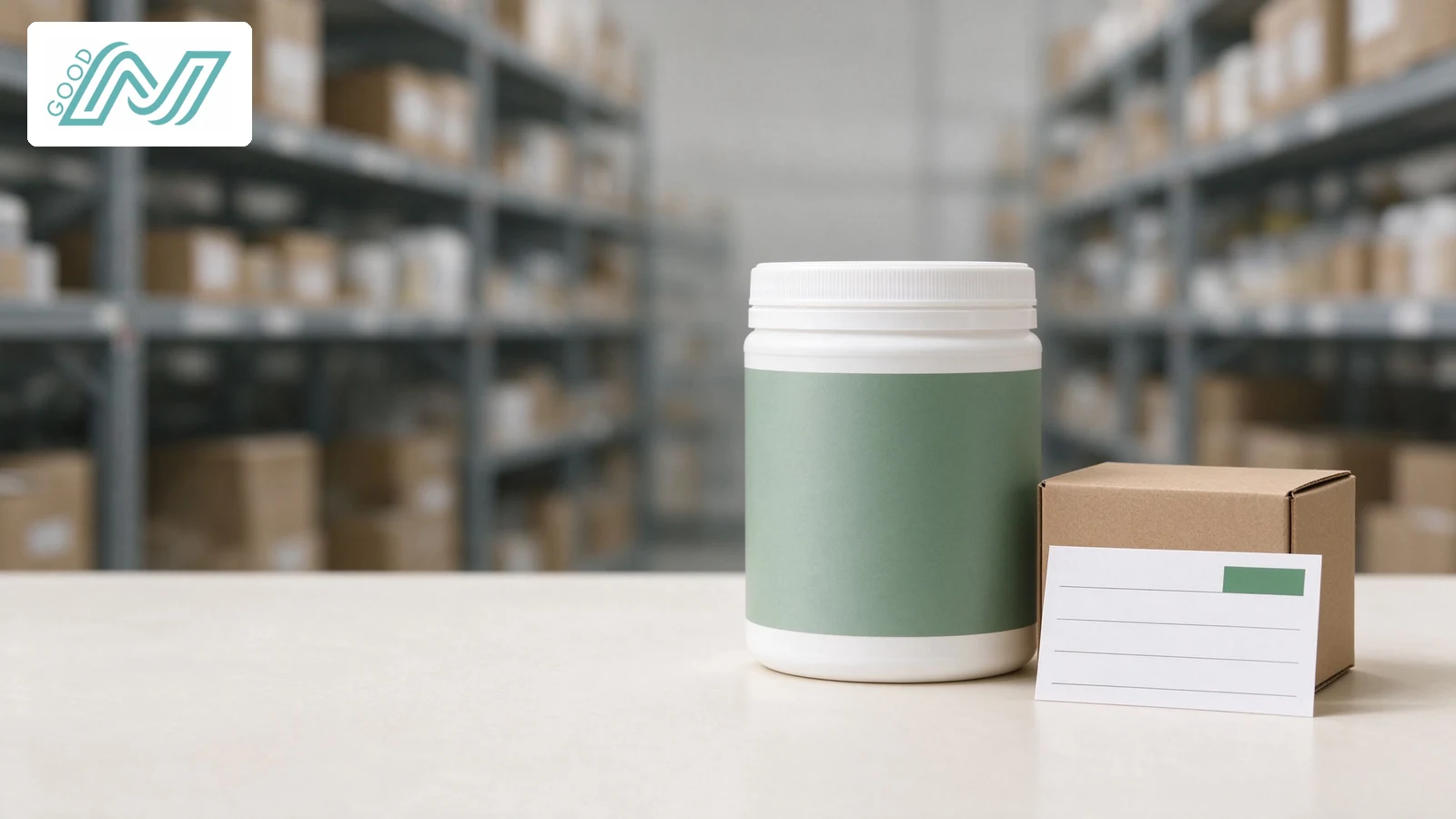
Agree a sampling and reclosure procedure that is suitable for the material and your facility. Ask the supplier about handling precautions after opening and the evidence supporting any stated use period. Do not transfer an unopened-package shelf life to an opened or repacked container without review.
Record when a container was opened, how the sample was identified and how the remaining material was protected. Assess whether transfers, temporary storage or repeated opening change the conditions represented by the supplier’s documentation. Your quality team should decide the controls needed for the intended process; a generic online guide cannot establish an exposure-time limit.
Handle SAM-e packaging discrepancies without inventing a release rule
If labels, documents, packaging or transport evidence conflict, keep the affected lot identified and record the unresolved issue. Send the supplier the lot code, relevant observations, agreed requirements and available records. Request a documented assessment applicable to that shipment. Any additional testing or release decision should follow QA-approved criteria; a fresh assay result alone need not address every stability or packaging concern.
Questions about SAM-e packaging to include in the RFQ
Please identify the exact SAM-e grade and provide the current specification, package configuration and written storage and transport instructions. State which evidence supports these conditions and any unopened or opened-package date claims. Confirm the lot-document set, proposed pack size, sampling precautions and approach to transport deviations. Please confirm current sample availability, MOQ and lead time for our quantity and destination.
Use the SAM-e product listing and request-a-quote form to discuss the current offer with Good Nutrition Bio. This checklist does not establish which packaging or transport service is included in a particular quotation.
For U.S. dietary supplement operations, consult the applicable 21 CFR Part 111 cGMP requirements for manufacturing, packaging, labeling, holding and recordkeeping context; confirm applicability with qualified QA or regulatory personnel.
Frequently asked questions
Does every SAM-e shipment require refrigerated transport?
Do not assume a universal requirement. Obtain the exact grade’s written transport instructions and supporting evidence, then agree the shipment controls with the supplier and QA team.
Can I use the unopened shelf life after opening a container?
Do not automatically apply it. Confirm handling and reclosure instructions and any evidence for an opened-container use period before setting your procedure.
Is an intact outer container enough to release the lot?
No. Reconcile material identity, lot documents, required transport evidence and the agreed acceptance criteria before QA release.
What should I do if transport records show a deviation?
Identify and hold the affected material according to your procedure, retain the records and request a shipment-specific assessment. QA should decide disposition using applicable evidence and approved criteria.